


PS Wall Panel vs WPC Wall Panel 2026
 Jan 14, 2026|
 View:1752
You want to pick the best wall panel for your room. If you want style, easy setup, and water resistance, the AMER PS wall panel is a good choice. Many people use it in new offices, cool living rooms, and popular stores. If you care about helping the environment, the wpc wall panel uses recycled materials and saves wood. The WPC wall panel market is growing quickly and is worth billions of dollars around the world. If you choose a custom PS wall panel supplier, you get both good looks and usefulness.
Key Takeaways
PS wall panels do not weigh much and are simple to put up. This makes them a good pick for fast makeovers. WPC wall panels look like real wood and do not get damaged by water easily. They are great for places that are damp. Both types of panels are good for the planet. PS panels use old materials again, and WPC panels use old wood fibers. Think about how much you want to spend and how you want your room to look before you pick PS or WPC panels. PS panels work best in wet spots because they do not let water in. WPC panels last a long time and make rooms feel cozy.
Material Comparison

PS Wall Panel Composition
A ps wall panel is made mostly from polystyrene. Makers use small polystyrene pellets or beads. These come from oil-based chemicals. Some companies use recycled polystyrene to help the planet. They also use high-impact polystyrene to make the panels stronger. This material makes the panel light and tough.
Polystyrene pellets or beads are the main part.
Using recycled polystyrene cuts down on trash.
High-impact polystyrene makes the panel harder to break.
Polystyrene makes the panel simple to move and put up. This material keeps its shape and does not crack easily. Many people like polystyrene because it does not soak up water. This helps the panel last longer in wet places.
WPC Wall Panel Composition
A wpc wall panel is also called wood-plastic composite. It mixes wood fibers with plastic. There are also special additives to make the panel better.
Here is a table that shows the main parts:
Component/Additive | Description |
|---|---|
Wood Fibers | These come from different trees. They make the panel look and feel like wood. |
Thermoplastics | These are plastics like polyethylene, polypropylene, or PVC. They make the panel strong and keep out water. |
Coupling Agent | This helps the wood and plastic stick together. It keeps the panel stable. |
UV Stabilizer | This protects the panel from sunlight. It stops fading and breaking. |
Lubricants | These make it easier to make the panels. They also make the surface smoother. |
Antioxidants | These stop the plastic from getting weak. They help the panel stay strong and keep its color. |
Wood fibers give the panel a real wood look. The plastic makes the panel last longer and keeps water out. Additives like UV stabilizers and antioxidants help the panel stay strong and colorful for a long time.
Key Differences
There are some big differences between a ps wall panel and a wpc wall panel. The first difference is the main material. A ps wall panel uses polystyrene. A wpc wall panel uses wood fibers and plastic. Polystyrene panels are light and easy to put up. Wpc panels are heavier and feel more solid because of the wood.
Polystyrene panels do not let water in. This makes them good for kitchens, bathrooms, and other wet rooms. Wpc panels also keep out water, but the wood can soak up a little if the panel gets damaged.
The look is different too. Polystyrene panels can look like wood, stone, or stone plastic composite. They come in many colors and styles. Wpc panels look and feel more like real wood. Some people like this for a natural look.
Spc panels use stone plastic composite as the main material. Spc panels are heavier and harder than both ps wall panel and wpc wall panel. People use spc panels in places that need extra strength, like busy stores or buildings.
Tip: Think about where you want to use your wall panel. Polystyrene is best if you want easy setup and water resistance. Wood-plastic composite is good for a natural look and solid feel. Stone plastic composite is best for the strongest and toughest needs.
Each material has its own good points. Polystyrene is light and keeps out water. Wood-plastic composite feels like wood and is strong. Stone plastic composite is the toughest for special jobs.
PS Wall Panel Features
Lightweight and Durable
You want a wall panel that is easy to handle and strong enough to last. The ps wall panel gives you both. You can lift and move these panels without much effort. Most panels weigh between 1.0 and 1.9 kilograms per square meter. This makes them lighter than many other wall panel materials. You can see the difference in this table:
Material | Average Weight (kg/m²) |
|---|---|
PS Wall Panels | 1.0 - 1.9 |
Other Materials | N/A |
You can install these panels quickly because of their light weight. You do not need special tools or extra help. The ps wall panel also stands up to daily use. Third-party testing agencies have checked the durability of these panels. Here are some ratings:
Classification | Details |
|---|---|
Code Fire Classification | Class III or C |
Flame Spread Rating | 76-200, smoke developed index <450 |
Building Code Compliance | PS 2-18 |
Testing Agency | APA® – The Engineered Wood Association |
You can trust these panels to keep their shape and resist cracking. You get a product that lasts for years and keeps your space looking good.
Style and Texture Options
You want your walls to look great and match your taste. The ps wall panel offers many choices for style and texture. You can pick from a wide range of designs. Here are some popular options:
Vertical stripes
Wood grain
Marble print
3D embossed patterns
You can use these panels to create a modern, classic, or bold look. The variety helps you match any room or design theme. You can choose a wood grain for a warm, natural feel. You can pick marble print for a touch of luxury. If you want something unique, 3D embossed patterns add depth and interest. The ps wall panel gives you the freedom to express your aesthetic style. You can enjoy both function and aesthetic appeal in one product.
Waterproof and Moisture-Proof
You need wall panels that can handle wet spaces. The ps wall panel has strong waterproof properties. You can use these panels in kitchens, bathrooms, and other damp areas. The panels do not soak up water. They keep their shape and do not swell or warp. You do not have to worry about mold or moisture damage.
You can clean the panels with a damp cloth. The surface stays smooth and fresh. The waterproof properties make these panels a smart choice for homes and businesses. You get peace of mind knowing your walls stay safe and dry. You can use ps wall panel in places where spc or other materials might not work as well. You get both protection and a clean, modern look.
WPC Wall Panel Features
Durability and Rot Resistance
You want your walls to last for many years. WPC wall panels give you strong durability. You do not have to worry about rot or mold. These panels resist moisture, so they do not break down like wood. You can use them in places that get wet, such as kitchens or bathrooms. WPC panels also stand up to outdoor weather. They do not fade or crack in the sun. You do not need to paint or seal them often.
WPC wall panels can last over 20 years in high-humidity environments with minimal maintenance.
Unlike wood, WPC is resistant to moisture, rot, and mold, making it an ideal choice for outdoor environments.
WPC offers superior weathering resistance and is impervious to moisture, UV rays, termites, and rot.
You can trust these panels to keep your space looking good for a long time.
Wood-Like Appearance
You may want your walls to look like real wood. WPC wall panels give you a natural wood aesthetic. The surface feels smooth and looks like wood grain. You can choose from many colors and patterns. Some panels look like oak, walnut, or pine. Others have a modern style. You can match your room’s design easily.
Tip: If you want the beauty of wood without the problems of rot or termites, WPC panels are a smart choice.
You get the natural wood aesthetic with less work and more durability.
Moisture Performance
You need wall panels that can handle water. WPC wall panels are moisture-resistant. You can use them in humid places, such as bathrooms, kitchens, or even outside. The panels do not warp or decay when they get wet. Their water resistance helps keep your walls safe and clean.
WPC wall panels are moisture-resistant, making them suitable for humid areas like bathrooms and kitchens.
Their water resistance helps prevent warping and decay.
WPC is waterproof, UV-resistant, and resistant to fading, impact, and corrosion.
You can clean these panels with a damp cloth. You do not have to worry about stains or damage from water. WPC panels help you keep your home or business looking fresh.
Installation and Maintenance
PS Wall Panel Installation
You will find that installing a ps wall panel is simple and quick. You only need a few basic tools to get started. These include a measuring tape for accuracy, a level to keep everything straight, an adhesive gun for applying glue or silicone, and a rubber mallet to press the panels firmly against the wall. This small tool list means you do not need special equipment or advanced skills. The modular design of these panels helps you finish projects faster and with less effort. You can save money on labor because the process is efficient and does not require extra workers. Many people choose this option for its installation ease and cost savings.
WPC Wall Panel Installation
WPC wall panels also offer a straightforward installation process. You can cut the panels to fit your space using standard woodworking tools. You attach them to the wall with clips, screws, or adhesive, depending on the surface. The panels fit together with tongue-and-groove edges, which helps you line them up easily. You may need a bit more time and care to ensure a perfect finish, especially if you want the seams to look seamless. Most homeowners can handle the job with basic tools and patience.
Maintenance Tips
Both ps wall panel and WPC wall panels give you low maintenance. You can keep them clean with a few easy steps:
Remove dust using a soft, dry cloth or a vacuum with a brush.
Mix mild soap or detergent in warm water.
Wipe the panels gently with a damp cloth or sponge.
For tough spots, use a soft-bristle brush and scrub lightly.
Rinse with clean water and dry with a soft cloth.
You should dust the panels often to keep them looking fresh. Always test any cleaning solution on a small area first. Choose mild cleaners to avoid damage. These steps help you enjoy low maintenance and keep your walls looking new for years.
Tip: Both panel types resist stains and water, so you spend less time on repairs and cleaning. This makes them a smart choice for busy homes and businesses.
Cost Comparison
PS Wall Panel Affordability
You want to know how much you will spend on wall panels. PS wall panels give you a budget-friendly option. You can save money because these panels are light and easy to install. You do not need to hire many workers or buy special tools. This means you pay less for labor and materials. Many homeowners choose PS wall panels when they want to update a room without spending too much. You can also finish your project faster, which saves you more money.
WPC Wall Panel Pricing
WPC wall panels usually cost more than PS wall panels. The price can change based on where you live and which supplier you choose. In India, you might pay between ₹200 and ₹600 for each square foot. In the USA, the price is about $20 to $60 per square foot, including installation. In Europe, prices are higher because of strict quality rules. Here is a table to help you see the difference:
Region | Price Range |
|---|---|
India | ₹200–₹600 per sq. ft. |
USA | $20–$60 per sq. ft. |
Europe | Higher due to quality rules |
You should check with local suppliers to get the best deal. Prices can change if you buy in bulk or choose special designs.
Value for Money
You want the best value for your money. PS wall panels give you a good mix of style, strength, and low cost. You can use them in many places, and they last a long time. WPC wall panels cost more, but they give you a real wood look and strong weather resistance. You should think about your needs before you choose. If you want to save money and finish your project quickly, PS wall panels are a smart choice. If you want a natural look and do not mind paying more, WPC wall panels are a good option. This cost comparison helps you pick the right panel for your budget and style.
Environmental Impact
PS Wall Panel Eco-Friendliness
You may wonder if PS wall panels are good for the earth. Many companies use recycled materials to make these panels. This helps cut down on trash and saves natural resources. Some panels have a lot of recycled content. For example:
Some PS wall panels have 24% to 43% recycled materials. These come from things people used before and from factories.
The total recycled content can be as high as 57% to 71%. This includes scraps and products that did not pass quality checks.
When you pick a PS wall panel, you help the planet. These panels meet tough safety rules. They do not let out bad chemicals in your house or office. You can feel proud to use something that helps keep the earth clean.
WPC Sustainability
WPC wall panels also care about the environment. Makers use wood fibers and plastic, often from recycled stuff. Many WPC panels get special awards for being green. Here is a table with some common awards:
Certification | Description |
|---|---|
FSC | Makes sure wood fibers come from forests that are managed well. This is important for LEED points. |
GREENGUARD Gold | Shows the panels do not give off many bad gases. This keeps places like schools and hospitals safe. |
Cradle to Cradle | Checks if products can be reused or recycled. It also looks at how safe the materials are. |
These awards show that WPC panels are good for buildings and the planet. When you choose WPC wall panels, you help save trees and stop pollution. Both PS and WPC panels are smart choices if you want to help the environment.
Applications
Residential Uses
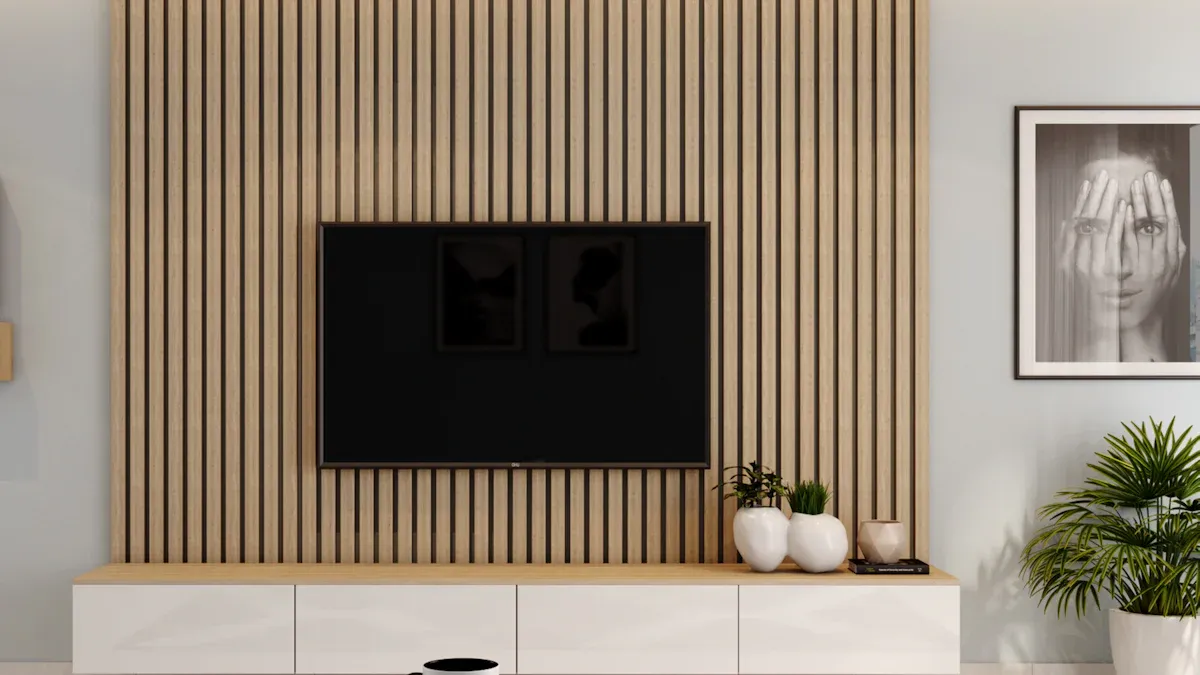
You can use PS wall panels and WPC wall panels in many rooms at home. If you want your living room or bedroom to look nice, PS wall panels are a good pick. They cost less than other wall materials, so you save money. These panels are light, so you can put them up without much trouble. This makes them great for fixing up your house. WPC wall panels also work well in homes. They look good and do their job well. WPC panels help keep rooms quiet by blocking sound. You can find many designs to fit your taste.
PS wall panels make living rooms and bedrooms look stylish.
They are cheap and simple to put up.
WPC wall panels block noise for quiet rooms.
Both types have lots of designs to choose from.
Commercial Uses
You see PS wall panels and WPC wall panels in lots of businesses. These panels make places look nice and protect walls from getting damaged. The table below shows how different businesses use these panels:
Commercial Sector | Applications |
|---|---|
Retail Stores | Product displays, signage, dividing sections |
Restaurants and Cafes | Warm atmosphere, wall protection from spills and stains |
Offices | Space division, style boost for employee morale and productivity |
Healthcare Facilities | Clean, hygienic environment, easy maintenance, moisture resistance |
You can use these panels to make your business look modern and easy to clean.
Best Scenarios for Each Panel
You should think about what you need before picking a wall panel. PS wall panels are best for places that get wet a lot. You get more choices for colors and cool textures. These panels have bright colors and smooth surfaces, so they look good on special walls at home or work. WPC panels are better if you want walls that look like wood and keep things quiet. You can use them in quiet rooms or places where you want things to feel cozy.
Tip: Pick PS wall panels for wet rooms and bold styles. Choose WPC panels for quiet spots and a wood look.
Pros and Cons
PS Wall Panel Pros and Cons
You want to know what makes PS wall panels a smart choice. These panels give you many benefits, but you should also know about their limits. Here is a table that shows the main pros and cons:
Advantages | Disadvantages |
|---|---|
You can install them quickly, which saves you money and time. | You may pay more at first compared to basic drywall. |
You can reuse and move panels, which helps the environment. | Some lightweight panels may not last in busy areas. |
You get better sound and heat control than with regular drywall. | You might have trouble fitting panels in older buildings with tricky layouts. |
You can pick from many designer finishes, so you do not need extra paint or décor. | You may find it hard to get local installers who know advanced systems. |
Note: PS wall panels from brands like AMER offer rapid installation and stylish finishes. You can use them to upgrade your space without much hassle.
You can see that PS wall panels work well if you want a modern look and easy setup. You should check if your building is ready for these panels before you start.
WPC Wall Panel Pros and Cons
WPC wall panels also have strengths and weaknesses. You should look at both sides before you decide. The table below lists the most common pros and cons:
Advantages | Disadvantages |
|---|---|
You get a wood-like look and feel, which adds warmth to any room. | You may pay more than for drywall or plywood. |
You enjoy strong resistance to moisture, mold, and rot. | You have fewer design choices, so custom looks are harder to achieve. |
You can use them in wet or outdoor spaces. | You may see scratches or dents in busy areas. |
You help the planet by using panels with recycled wood fibers. | The plastic part does not break down easily, which can harm the environment. |
You get panels that last for years with little upkeep. | You often need a pro to install them, which adds to the cost. |
You do not need to paint or seal them often. | WPC panels do not resist fire as well as some other materials. |
Tip: WPC wall panels work best if you want a natural look and need panels for wet or outdoor spaces.
You should think about your budget, your style, and where you want to use the panels. This helps you pick the best option for your project.
You have learned the main differences between each wall panel. If you want easy installation, water resistance, and many style choices, the ps wall panel works best. AMER offers panels that save you time and money. If you prefer a wood look and strong outdoor performance, WPC panels fit your needs. Think about your budget, style, and where you will use the panels. Choose the option that matches your project goals.
FAQ
What makes AMER PS wall panels easy to install?
You only need basic tools like a tape measure, adhesive gun, and level. You can finish most projects quickly. You do not need special skills or extra workers.
Can you use PS wall panels in bathrooms?
Yes, you can use PS wall panels in bathrooms. These panels resist water and moisture. You do not have to worry about mold or swelling.
How do you clean WPC wall panels?
Use a soft cloth or sponge with mild soap and water.
Wipe the surface gently.
Avoid harsh chemicals.
Dry with a clean towel for best results.
Which panel is better for the environment?
Panel Type | Eco-Friendly Features |
|---|---|
PS | Uses recycled polystyrene |
WPC | Uses recycled wood fibers and plastic |
Both options help reduce waste and support green building.


Recent News
1.How to Install PS Wall Panel?
2024-09-232.4 Best Materials of Kitchen Wall Boards for You
2024-08-273.How to install decorative wall paneling?
2024-08-064.Innovative Interior Design discover the Versatility of Polystyrene Decorative Wall Panels
2024-04-225.Polystyrene Wall Panels Waterproof And Moistureproof Capacity
2024-10-306.What Is Polystyrene Walls?
2024-12-077.What Is A WPC Wall Panel? Everything You Need To Know
2026-01-138.WPC wall boards: The Ultimate Guide to Stylish Decor
2026-01-13