


WPC Wall Panel Buying Guide: Pros, Cons, Cost, Applications & How to Choose
 Sep 20, 2026|
 View:2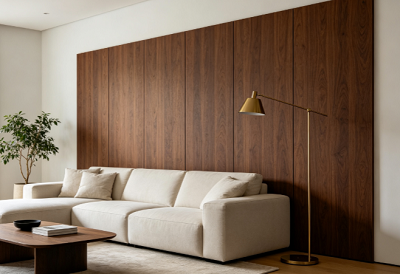
Choosing the right wall panel is not only about appearance. For homeowners, architects, contractors, distributors, wholesalers, and project buyers, a suitable wall panel also needs to meet requirements for durability, moisture resistance, maintenance, installation, design, cost, and long-term use.
WPC wall panels have become an increasingly popular option because they combine a wood-inspired appearance with the practical characteristics of composite materials. However, not every WPC wall panel is the same, and the right product depends on where it will be installed, how it will be used, and what specifications the project requires.
This WPC wall panel buying guide explains the key advantages and disadvantages of WPC wall panels, typical costs, applications, material comparisons, and the factors buyers should evaluate before choosing a WPC wall panel supplier.
What Is a WPC Wall Panel?
WPC stands for Wood Plastic Composite. A WPC wall panel is a decorative wall covering made by combining wood-based materials with polymer materials and other additives.
The wood component contributes to the natural appearance and texture, while the polymer component helps improve resistance to moisture and other environmental factors. Depending on the formulation and manufacturing process, WPC wall panels can also incorporate pigments, stabilizers, coupling agents, and surface treatments.
Modern WPC wall panels are available in many designs, including:
Fluted WPC wall panels
Slatted WPC wall panels
Wood-grain WPC wall panels
Decorative WPC wall panels
Interior WPC wall panels
Exterior WPC wall cladding
The exact performance of a WPC wall panel depends on its material composition, structure, surface treatment, and intended application. Buyers should therefore evaluate product specifications rather than treating all WPC panels as identical.
What Are the Advantages of WPC Wall Panels?
WPC wall panels are used in residential and commercial projects for several reasons. Their advantages can include design flexibility, relatively low maintenance, moisture resistance, and efficient installation.
1. Moisture and Water Resistance
One of the main reasons buyers consider WPC wall panels is their resistance to moisture.
Unlike conventional natural wood, which can absorb moisture and may require additional protection in humid environments, WPC panels are designed with polymer components that can reduce moisture-related problems.
This makes suitable WPC wall panels useful for applications such as:
Kitchens
Bathrooms
Restaurants
Hotel interiors
Humid indoor environments
Commercial interiors
However, buyers should distinguish between water-resistant and waterproof. The appropriate specification depends on the actual product formulation and testing.
For areas with frequent water exposure, always ask the supplier for product-specific technical information before ordering.
2. Low Maintenance
WPC wall panels can reduce routine maintenance compared with some traditional wood wall finishes.
Natural wood may require periodic sanding, staining, sealing, or refinishing depending on the environment and finish. Many WPC wall panels can instead be cleaned with common household or commercial cleaning methods.
For commercial projects such as hotels, restaurants, offices, and retail stores, lower routine maintenance can help reduce the time and labor required to maintain decorative wall surfaces.
3. Wood-Like Appearance
A major attraction of WPC wall panels is their ability to provide a wood-inspired appearance without requiring the same maintenance approach as natural timber.
Depending on the product, manufacturers can create:
Oak-inspired finishes
Walnut-inspired finishes
Teak-inspired colors
Natural wood textures
Embossed surfaces
Modern linear profiles
Decorative 3D patterns
This allows designers to create warm and natural-looking interiors while working with a manufactured wall covering.
4. Wide Range of Designs
WPC wall panels are no longer limited to simple flat boards.
Modern production technologies allow manufacturers to offer different profiles and surface designs, including 3D, fluted, slatted, embossed, and wood-grain WPC wall panels.
Design flexibility is particularly useful for:
Feature walls
TV background walls
Hotel lobbies
Restaurant interiors
Office reception areas
Retail stores
Residential interiors
For distributors and wholesalers, a wider design range can also make it easier to serve different customer preferences and local markets.
5. Resistance to Mold, Rot, and Insects
The polymer component of WPC can help reduce some of the biological deterioration associated with untreated natural wood.
Depending on the formulation and environment, WPC wall panels can offer resistance to issues such as:
Rot
Moisture-related deterioration
Mold growth
Termite or insect damage
However, performance should always be evaluated according to the manufacturer's specifications and the intended installation environment.
6. Efficient Installation
Many WPC wall panel systems are designed for relatively efficient installation.
Depending on the product, installation may involve:
Adhesive
Clips
Screws
Furring strips
Interlocking systems
Tongue-and-groove systems
Efficient installation can reduce labor time and simplify large-area wall decoration.
For contractors and project buyers, installation should therefore be evaluated as part of the total project cost, rather than comparing material prices alone.
7. Consistent Dimensions and Appearance
Natural wood can vary in color, grain, moisture content, and dimensions. Manufactured WPC panels can provide more consistent dimensions and repeatable surface patterns.
This can be particularly useful for large commercial projects where buyers need:
Consistent color
Consistent texture
Stable dimensions
Repeatable profiles
Batch-to-batch consistency
For large orders, buyers should confirm the supplier's quality-control procedures and color consistency between production batches.
8. Customization Options
For commercial and wholesale projects, standard products are not always enough.
Depending on the manufacturer's capabilities, WPC wall panels can be customized in areas such as:
Color
Surface texture
Profile
Dimensions
Packaging
Logo
Surface finish
OEM and ODM services can be particularly useful for distributors and importers who want to develop products for a specific market.
What Are the Disadvantages of WPC Wall Panels?
WPC wall panels offer several practical advantages, but they also have limitations. Understanding these limitations before purchasing can help buyers select a more appropriate product.
1. Higher Initial Cost Than Some Low-Cost Wall Materials
The initial material cost of WPC wall panels can be higher than some low-cost alternatives, particularly basic PVC panels, paint, or other economical wall finishes.
However, material price alone does not determine the total project cost.
Buyers should also consider:
Installation labor
Accessories
Maintenance
Replacement requirements
Transportation
Product lifespan
Surface preparation
For this reason, comparing total installed cost can provide a more useful basis for project decisions.
2. Thermal Expansion and Contraction
Like many polymer-based composite materials, WPC can expand and contract when exposed to temperature changes.
This is particularly important for large installations and areas exposed to significant temperature variation.
Correct installation may require consideration of:
Expansion gaps
Fixing methods
Substrate conditions
Panel length
Temperature range
Installation environment
Buyers should follow the manufacturer's installation instructions rather than applying the same installation method used for traditional wood.
3. Limited Load-Bearing Capacity
WPC wall panels are generally used as decorative wall coverings, not as structural wall components.
Heavy items such as:
Televisions
Cabinets
Shelves
Equipment
Wall-mounted fixtures
should not automatically be attached directly to the decorative panel.
Where heavy loads are involved, the fixing system should transfer the load to an appropriate structural substrate, framing system, or wall support.
4. Severe Impact Can Damage the Surface
WPC wall panels can withstand normal use, but severe impact or improper handling can damage the surface.
For commercial projects, buyers should consider:
Expected traffic
Impact exposure
Surface finish
Panel structure
Cleaning methods
Installation location
A product designed for a decorative residential feature wall may not necessarily be the best choice for a high-impact commercial environment.
5. Not Every WPC Wall Panel Is Suitable for Outdoor Use
This is an important point for buyers.
Interior WPC wall panels and exterior WPC wall cladding should not be treated as interchangeable products.
Outdoor applications may expose panels to:
UV radiation
Rain
Temperature changes
Humidity
Wind
Freeze-thaw cycles
If a project requires exterior installation, buyers should confirm:
UV resistance
Weather resistance
Moisture resistance
Temperature stability
Recommended installation conditions
Expected outdoor performance
Always select a product specifically designed and tested for the intended environment.
6. Product Quality Can Vary Between Suppliers
Two WPC wall panels can look similar while having significantly different material composition, density, surface treatment, dimensional stability, and manufacturing quality.
Important factors include:
Raw material composition
Wood-to-polymer ratio
Panel density
Production process
Surface treatment
Dimensional tolerance
Color consistency
Quality-control procedures
Therefore, choosing a WPC wall panel manufacturer should involve more than comparing quotations.
How Much Do WPC Wall Panels Cost?
There is no single universal price for WPC wall panels because the final quotation depends on the product and project requirements.
The main cost factors include:
| Cost Factor | What Can Affect the Cost |
|---|---|
| Material composition | Raw material formulation and quality |
| Panel size | Length, width, and thickness |
| Panel structure | Hollow or solid construction |
| Surface finish | Wood grain, embossed, laminated, or other finishes |
| Design | Flat, fluted, slatted, or 3D profiles |
| Color | Standard or customized colors |
| Customization | Special profiles, dimensions, textures, or logos |
| Order volume | MOQ and total quantity |
| Packaging | Standard or customized export packaging |
| Accessories | Clips, trims, profiles, and fixing components |
| Shipping | Destination, loading method, and Incoterms |
| Installation | Labor, tools, substrate preparation, and installation system |
For overseas buyers, the most useful way to evaluate WPC wall panel pricing is to consider landed cost or total project cost, rather than focusing only on the factory price per square meter.
For a project quotation, provide the supplier with:
Required quantity
Panel dimensions
Thickness
Preferred color
Surface design
Application
Destination country
Packaging requirements
Customization requirements
This allows the manufacturer to provide a more accurate quotation.
Where Can WPC Wall Panels Be Used?
WPC wall panels can be used in a wide range of residential and commercial environments.
Residential Interiors
Typical applications include:
Living room feature walls
Bedroom walls
TV background walls
Hallways
Entryways
Home offices
Decorative partitions
WPC panels are particularly useful when homeowners or designers want to introduce wood-inspired texture without using conventional timber wall decoration.
Hotels and Hospitality
Hotels, resorts, restaurants, and other hospitality projects often require decorative materials that combine appearance with practical maintenance requirements.
Potential applications include:
Hotel lobbies
Guest rooms
Restaurant interiors
Reception areas
Corridor walls
Feature walls
Decorative partitions
Offices
WPC wall panels can be used to create a professional yet warm interior appearance in:
Reception areas
Meeting rooms
Executive offices
Corridors
Breakout spaces
Feature walls
Retail and Commercial Spaces
Retail stores and commercial interiors often use decorative wall panels to reinforce a specific brand or design concept.
Applications may include:
Retail stores
Showrooms
Shopping spaces
Restaurants
Salons
Commercial display areas
Exterior Applications
Exterior WPC wall cladding can be considered for:
Building facades
Outdoor feature walls
Balconies
Commercial buildings
Exterior decorative structures
However, only products specifically designed for outdoor conditions should be selected for these applications.
WPC Wall Panel vs Other Wall Materials
WPC is only one of several options available for wall decoration. The right material depends on the project's priorities.
| Factor | WPC Wall Panel | Solid Wood | PVC Wall Panel | MDF | Ceramic Tile |
|---|---|---|---|---|---|
| Wood-like appearance | High | Excellent | Medium | High | Low–Medium |
| Moisture resistance | Product-dependent | Low–Medium | High | Low–Medium | High |
| Maintenance | Low | Medium–High | Low | Medium | Medium |
| Installation efficiency | High | Medium | High | Medium | Lower |
| Design flexibility | High | Medium | High | High | High |
| Weight | Medium | High | Low | Medium | High |
| Surface options | High | Medium | High | High | High |
| Outdoor suitability | Product-dependent | Product-dependent | Product-dependent | Generally limited | High |
| Typical use | Decorative interiors and selected exterior applications | Premium interiors | Interior and wet-area applications | Interior decoration | Floors and wet-area walls |
The comparison should not be interpreted as meaning that one material is always better than another.
Instead, each material has different strengths.
WPC can be attractive when buyers want a wood-inspired appearance with low routine maintenance.
Solid wood can be preferred when authentic timber appearance and natural material characteristics are the main priorities.
PVC can be suitable when low cost and moisture resistance are key considerations.
MDF can be appropriate for certain interior decorative applications.
Ceramic tile can be preferred where high surface hardness and water resistance are important.
How to Choose the Right WPC Wall Panel?
Selecting the right WPC wall panel requires more than choosing a color or pattern.
1. Start With the Application
First determine where the panel will be installed.
Is the project for:
A residential feature wall?
A hotel?
A restaurant?
An office?
A retail store?
A bathroom?
A humid environment?
An exterior facade?
The application determines the specifications that should receive the most attention.
2. Choose the Right Design
Consider whether the project requires:
3D WPC wall panels
Fluted WPC wall panels
Slatted WPC wall panels
Wood-grain WPC panels
Custom decorative panels
For large projects, also confirm whether the supplier can maintain consistent color and texture across production batches.
3. Check Environmental Requirements
For indoor projects, consider humidity, cleaning requirements, and expected daily use.
For outdoor projects, pay particular attention to:
UV resistance
Weather resistance
Moisture resistance
Temperature stability
Installation requirements
Do not assume that a WPC panel designed for interior decoration is automatically suitable for exterior use.
4. Check Panel Specifications
Before ordering, ask for detailed specifications such as:
Length
Width
Thickness
Weight
Density
Panel structure
Surface finish
Color
Installation method
Accessories
Recommended application
These details can directly affect transportation, installation, material consumption, and project cost.
5. Consider Installation
Ask the supplier how the panels should be installed.
Depending on the product, the system may use:
Adhesive
Screws
Clips
Furring strips
Interlocking systems
Also confirm whether the supplier provides installation instructions and accessory recommendations.
6. Evaluate Customization Requirements
For large projects or private-label products, you may require:
Custom colors
Custom profiles
Custom dimensions
Custom textures
Custom packaging
Printed logos
OEM/ODM development
Confirm these capabilities before placing a large order.
What Should You Ask a WPC Wall Panel Manufacturer?
For overseas buyers, asking the right questions can help avoid quality and delivery problems.
What is the material composition?
Ask about:
Raw materials
Wood content
Polymer type
Additives
Density
Manufacturing process
Is the WPC wall panel suitable for outdoor use?
If outdoor installation is planned, request product-specific information regarding:
UV resistance
Weather resistance
Moisture resistance
Temperature performance
What sizes and colors are available?
For distributors and wholesalers, a broader range of sizes, colors, textures, and profiles can help support different local markets.
Can the product be customized?
Ask whether the manufacturer can customize:
Color
Texture
Profile
Size
Packaging
Logo
What is the MOQ?
MOQ can vary according to:
Product type
Color
Size
Customization
Packaging
Request a project-specific MOQ rather than relying on a general number.
Can I receive samples?
Samples allow buyers to evaluate:
Color
Texture
Surface finish
Panel rigidity
Appearance
Installation method
before committing to a large order.
What is the production lead time?
For large projects, confirm the production schedule before finalizing your construction or delivery timeline.
How are the panels packaged?
International buyers should ask about:
Carton packaging
Palletization
Moisture protection
Loading efficiency
Container loading
Protection of panel edges and surfaces
Why Choose AMER for WPC Wall Panels?
For international buyers, selecting a WPC wall panel supplier involves more than comparing product prices. Manufacturing capacity, product consistency, customization, communication, and supply reliability can all affect the success of a project.
AMER, operated by Jiangxi Rongke New Building Materials Co., Ltd., supplies WPC wall panels as part of a broader range of decorative building materials.
Manufacturing Capability
For distributors and project buyers, stable production capacity is important when repeated orders or large-volume projects are involved.
AMER's production infrastructure supports its WPC/PVC product range and is designed to provide more consistent supply for international customers.
Product Customization and R&D
Different markets have different preferences for colors, textures, profiles, and decorative styles.
AMER provides customization and product-development support for customers with specific requirements, including customized colors, textures, profiles, dimensions, packaging, and other product details.
Samples and Production Transparency
Before placing a large order, buyers can request samples to evaluate product appearance and specifications.
AMER also provides production videos and inspection images to support greater visibility during the purchasing process.
Support for International B2B Buyers
AMER works with professional buyers including:
Wall panel distributors
Channel providers
Wholesalers
Importers
Contractors
For customers developing local product portfolios, AMER can also provide catalog and display-board support.
FAQ About WPC Wall Panels
What is a WPC wall panel?
A WPC wall panel is a decorative wall covering made from wood-plastic composite materials. It combines wood-based materials with polymer components to create a manufactured wall surface with a wood-inspired appearance and practical performance characteristics.
Are WPC wall panels waterproof?
Some WPC wall panels offer strong moisture or water resistance, but performance varies by product. Buyers should check the manufacturer's technical specifications and testing before using a specific product in a wet or high-moisture environment.
Can WPC wall panels be used outdoors?
Some WPC wall panels are designed for exterior applications, while others are intended only for indoor use. For outdoor projects, check UV resistance, weather resistance, moisture resistance, temperature stability, and installation requirements.
Are WPC wall panels better than wood?
Neither material is universally better. WPC can be suitable when buyers want a wood-inspired appearance combined with lower routine maintenance and composite-material characteristics. Natural wood may be preferred when authentic timber appearance and natural material characteristics are the main priorities.
Are WPC wall panels better than PVC panels?
The choice depends on the project. WPC is often selected for its wood-inspired appearance and decorative design options, while PVC can be attractive for buyers prioritizing low cost and moisture resistance. Product-specific specifications should be compared before purchasing.
How much do WPC wall panels cost?
WPC wall panel prices depend on material composition, dimensions, thickness, profile, surface finish, color, customization, order quantity, packaging, and destination. Request a project-specific quotation for an accurate price.
Are WPC wall panels easy to install?
Many WPC wall panel systems are designed for efficient installation using methods such as adhesive, clips, screws, or interlocking systems. The exact installation method depends on the product.
Can WPC wall panels be customized?
Depending on the manufacturer, WPC wall panels can be customized in areas such as color, texture, profile, dimensions, packaging, and logo. Confirm OEM/ODM capabilities before placing a custom order.
What should I check before buying WPC wall panels?
At minimum, evaluate:
Material composition
Panel dimensions
Thickness
Density
Surface finish
Moisture resistance
Outdoor suitability
Installation method
Customization
MOQ
Samples
Lead time
Packaging
Quality control
How do I choose a reliable WPC wall panel supplier?
Look beyond price. Evaluate the supplier's manufacturing capacity, product consistency, quality-control process, customization capability, sample service, communication, packaging, lead time, and experience with international B2B orders.
Final Thoughts
A WPC wall panel can be a practical option for residential, hospitality, commercial, and selected exterior applications when the product specification matches the project requirements.
The main benefits include design flexibility, wood-inspired appearance, low routine maintenance, moisture resistance, and efficient installation. At the same time, buyers should consider factors such as initial cost, thermal expansion, load-bearing limitations, impact resistance, and the difference between interior and exterior-grade products.
For distributors, wholesalers, importers, contractors, and project buyers, the best purchasing decision is not simply based on the lowest price. Instead, compare product specifications, total project cost, customization, quality consistency, installation requirements, and supplier reliability.
If you are sourcing WPC wall panels for a residential, commercial, wholesale, or customized project, AMER can provide product options, samples, customization support, and project-oriented assistance to help you evaluate the right solution.
Recent News
1.What Are the Different Types of WPC Wall Panels?
2026-08-312.How to Choose a Reliable WPC Wall Panel Manufacturer in China 2026
2026-08-143.How to Choose a Reliable WPC Wall Panel Manufacturer for Your Interior Decoration Projects?
2026-07-294.WPC Wall Panel vs Traditional Wall Decoration Materials: Which One Is Better?
2026-07-295.Is WPC good for exterior walls?
2026-07-076.Why Choose WPC Wall Panel for Interiors?
2026-06-097.What is a PS wall panel?
2026-05-188.Top 6 WPC Exterior Wall Cladding Ideas
2026-04-179.WPC Wall Panel: The Pros, The Cons, And The Must-Knows
2026-04-03